
Why DMARC Matters for Email Marketing in 2026
Email marketing remains one of the most effective ways to reach customers in 2026. However, major email providers such as Gmail, Yahoo, Outlook, and Microsoft 365 have significantly tightened their email authentication requirements. Businesses that ignore these standards often experience poor inbox placement, increased spam filtering, and reduced campaign performance.
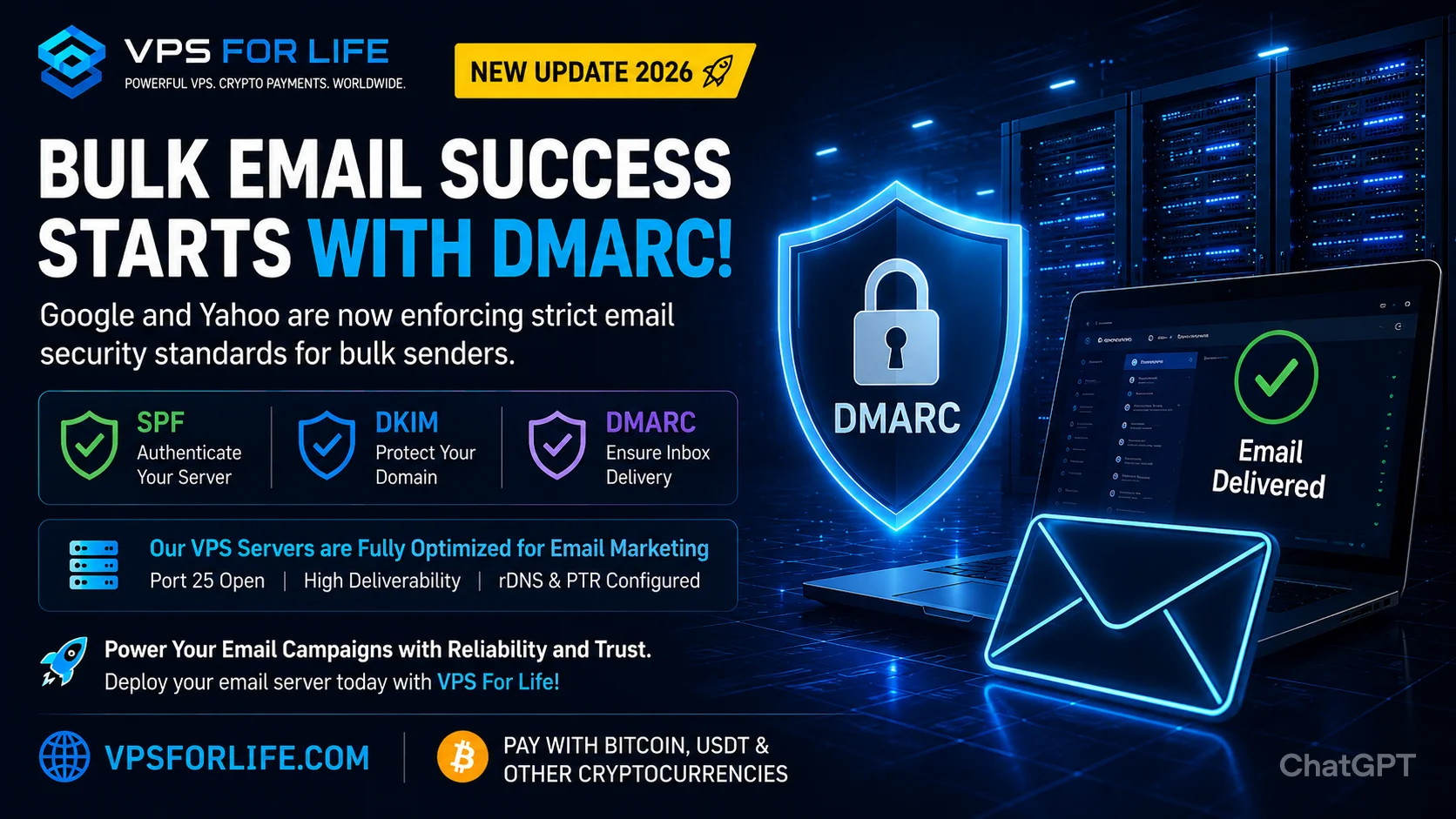
What is DMARC?
DMARC (Domain-based Message Authentication, Reporting and Conformance) is an email authentication protocol designed to protect domains from spoofing, phishing, and unauthorized email usage.
DMARC works together with:
-
SPF (Sender Policy Framework)
-
DKIM (DomainKeys Identified Mail)
When properly configured, DMARC helps receiving mail servers verify that messages are genuinely sent from your domain.
Why DMARC is Essential for Bulk Email Sending
Organizations sending newsletters, marketing campaigns, transactional emails, or large-scale email broadcasts should implement DMARC to improve deliverability and maintain sender reputation.
Benefits include:
-
Higher inbox placement rates
-
Better email deliverability
-
Reduced spam folder placement
-
Protection against domain spoofing
-
Increased trust from mailbox providers
-
Improved sender reputation
Bulk Email Requirements in 2026
Modern email providers now expect bulk email senders to implement:
-
Valid SPF records
-
Proper DKIM signatures
-
DMARC policy records
-
Reverse DNS (PTR/rDNS)
-
Consistent HELO/EHLO configuration
-
Dedicated IPv4 addresses
Without these requirements, even legitimate email campaigns may experience delivery issues.
VPS Hosting for Bulk Email with DMARC
A properly configured VPS provides the flexibility required for professional email marketing operations.
At VPS For Life, customers can deploy VPS servers with dedicated IPv4 addresses and configure their own email infrastructure, including:
-
SPF setup
-
DKIM configuration
-
DMARC records
-
rDNS / PTR records
-
Mail server optimization
This allows businesses to build a reliable email-sending environment while maintaining control over authentication and reputation management.
Best Practices for Better Deliverability
To maximize inbox placement:
-
Warm up new IP addresses gradually.
-
Configure SPF, DKIM, and DMARC correctly.
-
Monitor bounce and complaint rates.
-
Remove inactive subscribers regularly.
-
Use permission-based email lists only.
-
Track sender reputation and blacklist status.
Final Thoughts
As email providers continue strengthening anti-spam policies, DMARC is no longer optional for serious email marketers. Businesses that implement proper email authentication standards achieve higher delivery rates, stronger domain protection, and more successful marketing campaigns.
Whether you manage newsletters, transactional emails, or bulk email campaigns, combining a properly configured VPS with SPF, DKIM, and DMARC is one of the most effective ways to improve email performance in 2026.
الثلاثاء, يونيو/السادس 2, 2026
